On a bleak winter Saturday in December 1896, two sidecars wound their way toward the quiet village of Multyfarnham. Within them sat a small band of Franciscan friars, carrying little more than their personal belongings and an unshakeable sense of purpose. They had journeyed from Rome itself, entrusted with an ambitious mission: to build a college of learning in this remote part of Ireland.
As they crossed the stone bridge arching over the River Gaine, a stark and solemn scene unfolded before them. A weather-beaten friary and church stood against a heavy grey sky, the tower rising gaunt and resolute – an enduring witness to centuries of plunder, hardship, and survival. The surrounding countryside lay hushed and barren, tufted with rushes and dotted with leafless trees, wrapped in the stillness of winter. It was a landscape that spoke of endurance rather than comfort.
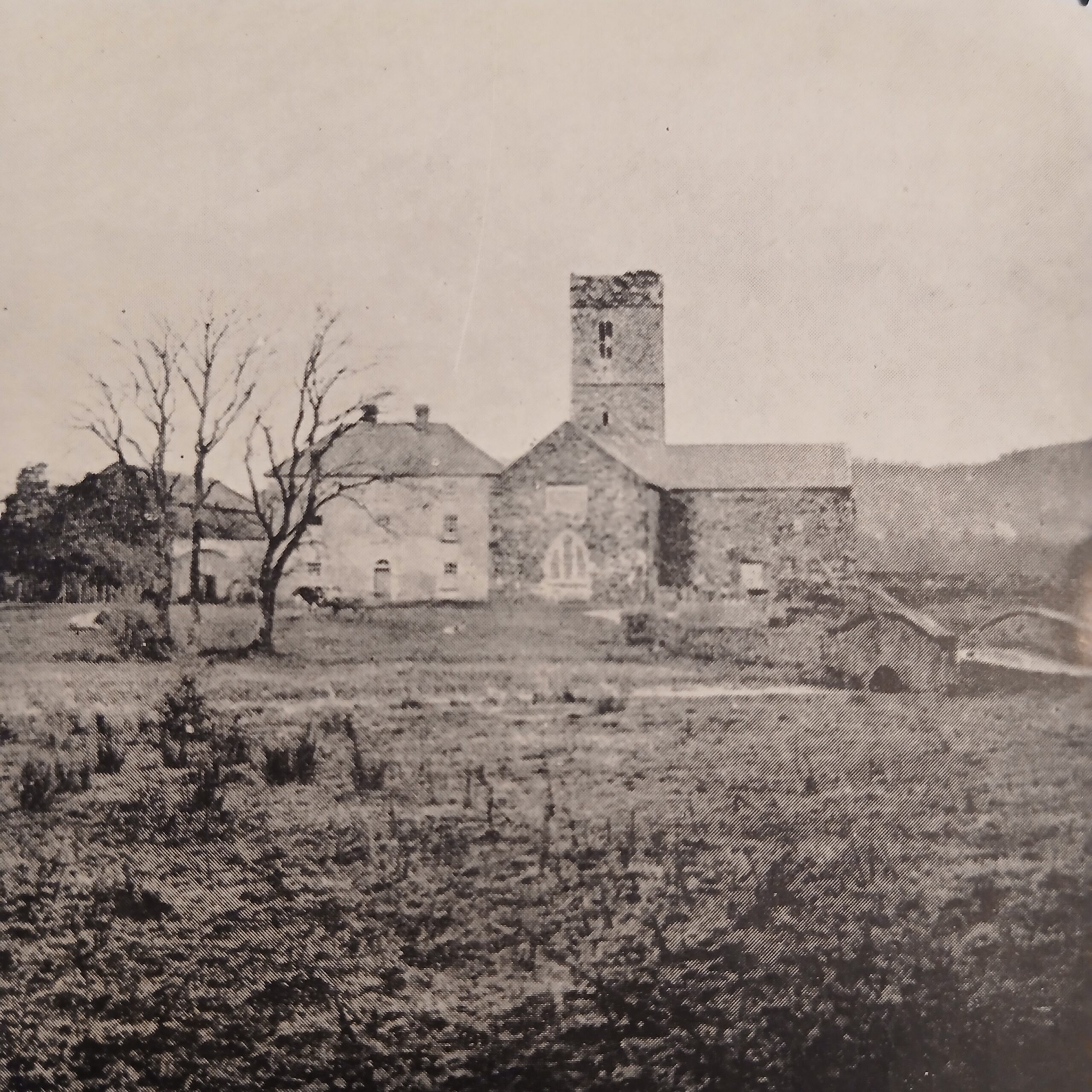
Multyfarnham Friary and church in the 1800’s
Yet the friars were undaunted. That very night, having settled into their new home, they gathered at midnight on Christmas Eve to recite their Office, sanctifying the silence with prayer before retiring. Christmas passed quietly, marked not by celebration but by preparation. The dawn of 1897 brought with it the immense task they had been sent to fulfil.
Their Superior, Fr Peter Begley OFM, worked closely with the architect Mr Nulty of Mullingar, dedicating months to shaping the plans for the future college. Then, on the Feast of St Anthony, June 13, 1897, a moment of profound significance arrived. Fr Begley celebrated High Mass for his companions, after which friars and parishioners alike, bearing banners aloft, processed together to a site some forty-five metres beyond the friary. There, amid prayer and hope, Fr Begley blessed the ground and laid the foundation stone. Two days later, the sound of building began.
As they had done since the friars first settled in the Gaine Valley in 1270, the people of Multyfarnham rallied in support. The community supplied the sand and all the timber needed for the first wing of the college. The building rose through direct labour, with workers earning nine shillings a day – modest wages for work that would leave a lasting legacy. After two years of steady effort, the first wing of the college was completed in 1899.
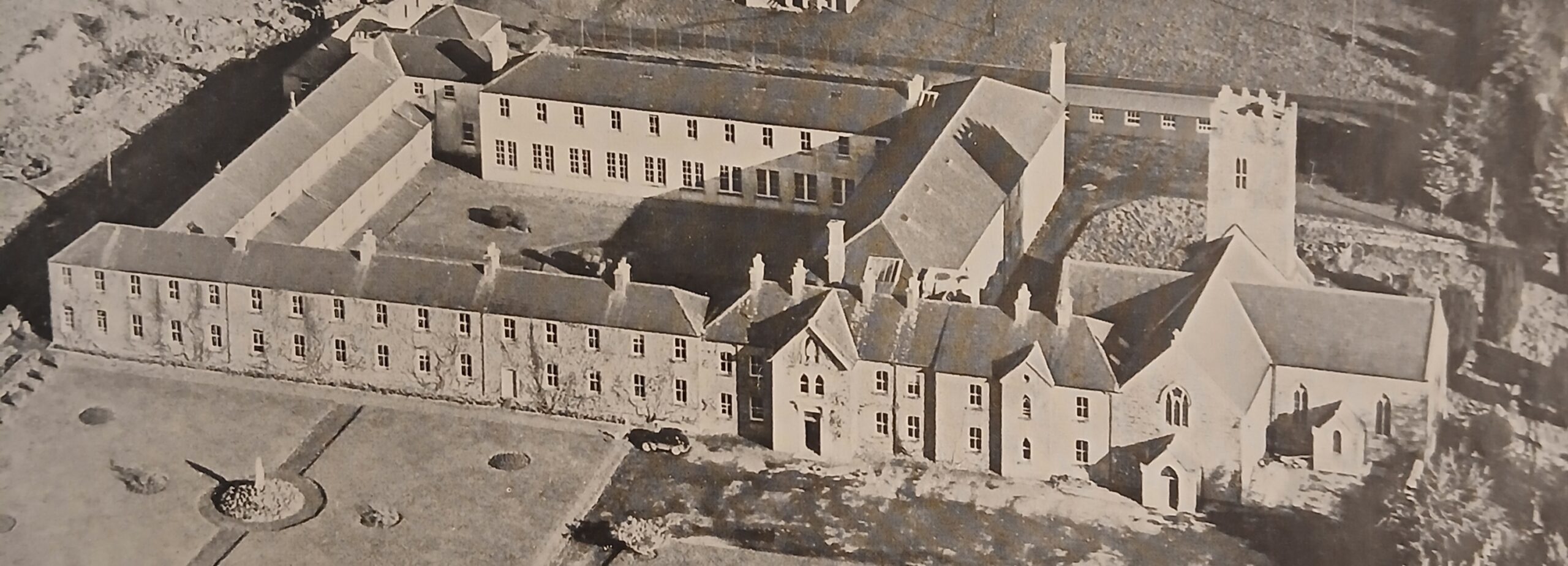
The completed Franciscan College Quadrangle Multyfarnham Friary
Within its walls were spaces dedicated to both mind and body: large rooms for study and class, a spacious refectory and kitchen, and above them, bathrooms and sleeping quarters for the students. Further wings followed in 1901 and 1915, each extension a testament to perseverance, faith, and shared vision.
By 1933, when the final wing of the quadrangle was completed, more than seventy students were enrolled. The friars who had crossed the River Gaine thirty-seven years earlier, like modern-day wise men, had brought with them gifts of knowledge, experience, and education, laying a foundation not of stone alone, but of competence and opportunity.
In 1956, a new Franciscan college opened in Gormanstown, County Meath, and Multyfarnham later found new purpose as a recognised Agricultural College, continuing its tradition of learning, until its closure in 2003.
What began on a bleak winter’s day became a beacon of education and inspiration, an enduring monument to faith, community, and the transformative power of vision brought to life through dedication.