
Reflecting on the imagery used to express the event of the Ascension of Our Lord in the readings for that feast day Mass, I was struck by the strange clash of metaphors found in those sacred texts. On one hand, we are told that Jesus is returning to the Father to sit at his right hand and therefore is leaving his disciples behind on earth, though in the care of the Holy Spirit, due in the coming days (Ephesians 1:20; Acts 1:8-9). Then, on the other hand, Jesus declares categorically that he will be with those disciples to the end of time (Mt 28:20).
Given that returning to God is usually taken to mean “going back to heaven” how can he also be present on earth? Is Jesus a frequent flyer back and forth, like a businessman working abroad during the week and travelling home for the weekend to his family?
The paradox involved in these clashing images is based on our conception of heaven as a place far away from this earthly state. The Word of God, the second person of the Trinity, was sent “down” to earth to adopt a human body and soul in the human being we call Jesus of Nazareth.
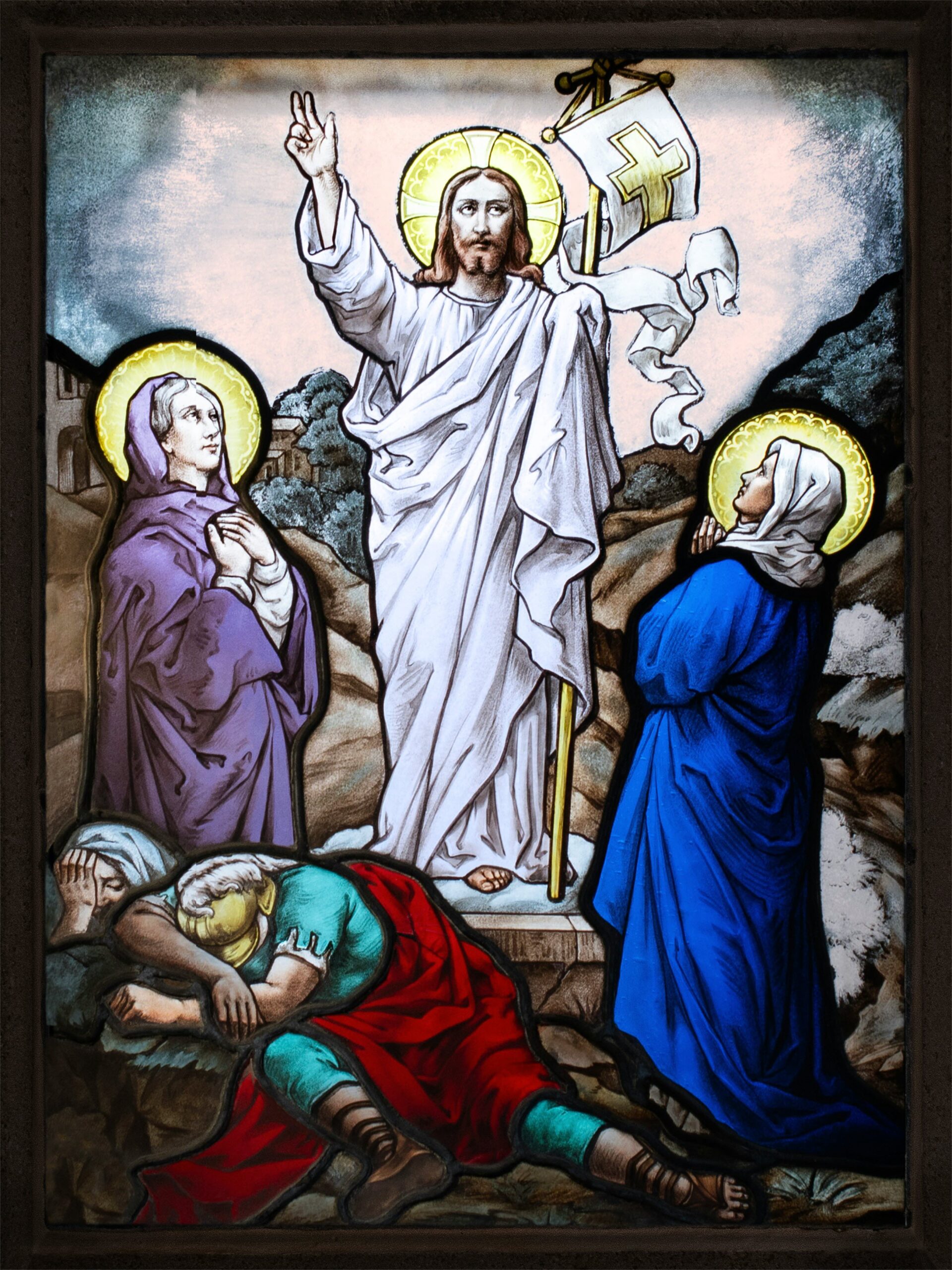
And, when his mission to save the world was “accomplished” (his own words, Jn 19:30!), he flew back to his true home, that “house of the Father” he speaks about where there are many rooms (Jn14:22). The imagery of the Ascension is akin to contemporary space travel with the Lord taking off like a rocket into space and disappearing from our sight!
The underlying problem with this kind of thinking was recognised by the Austrian Philosopher, Ludwig Wittgenstein, a Cambridge Professor, who warned of “the bewitchment of the intelligence by language.” This is sound advice indeed, especially for religious believers who struggle to grasp the reality of God, a pure spirit, in human imagery.
The locating of God in heaven is problematic because the language of space and place cannot apply to God in the way it applies to created things which have bodies and therefore must be some place, even if it means lying in a grave!
Traditionally, the biblical approach to this conundrum is to say that God is present everywhere, and sometimes in specific places but without occupying that space. So, the Old Testament holds strongly to the view that God is present in the temple in Jerusalem but in no way limited to that building (Ex.25:8; 2 Chronicles 7:16). After all he was just as much present to his people when liberating them from Egypt, going ahead of them as a cloud by day and a fire by night or on Mount Sinai giving the law to Moses or speaking through the prophets in the time of exile.
The association of heaven as God’s abode with the “heavens,” that is the skies and the stars, may have come in part from pagan worship of the Sun, so it is natural to think of the creator of such mysterious distant entities as living “up” or “beyond” them, in the far reaches of the universe.
I am particularly concerned with the image of distance as applied to God which can have a strong subconscious influence on the way we relate to our maker and redeemer.
My suggestion is that the idea of God being transcendent, wholly other, mysterious, different from and “above” all his creation comes to be associated in our imaginations with the image of physical distance or remoteness. God is far away. Prayer is a big effort in raising our hearts and minds to God. There is a ladder between heaven and earth, and climbing is hard work indeed, even if we could find where the ladder is located.
Now this idea of a transcendent God is essential for us to maintain, lest we try to bring God down to our level, manipulate him for our needs, and generally treat God as a kind of idol. While, it is true to say that God is immanent and therefore draws close to us, this must be balanced with a proper reverence for Almighty God, the Lord.
Still, there is a danger in associating transcendence with distance. This stems from the ambiguity of this term which can mean a physical gap between people or a relational one. For example, we can call a person who shows little interest in others, holding themselves aloof, avoiding involvement as “distant” in an emotional, ethical, and spiritual sense, even if physically present to others.
It is like sitting in a crowded bus or train where you can be “close” in your heart to a loved one living miles away, but distant from the person pressed against you. To make God a distant deity in heaven can make the one who is “closer to us than we are to ourselves” (St Augustine) seem like the watchmaker god of some Enlightenment philosophers, the one who winds up the clock of creation and then leaves it to its own devices.
To counter this temptation of being “bewitched” by spatial imagery we need to look at those images again and either reinterpret them or emphasise others that speak more of an appropriate closeness.
Take that image, already cited from the Last Supper speech to the apostles, in which Jesus spoke of going away to prepare a place for them, that famous house with many rooms (Jn 14:2)! We need to avoid the temptation here to take literally the metaphor of house and rooms, wondering what kind of rooms they could be, how many, and where we will be in the pecking order. In the past, it was common for some theologians to interpret this image as saying that the saints are in the best rooms close to God’s “throne-room” while the “ordinary,” “Joe Soap” Christian occupies the ones in the basement (if they are lucky).
But this image is better explained, I suggest, in the following lines which speak more of a relationship than a place. Jesus is going, only to return to take his friends with him, not to a distant place (heaven) but to share with him in the loving relationship he has with the Father, through the Holy Spirit (Jn 14:3).
It is who we are with that matters so much more in this image than where we are, though our earthbound thinking finds it hard to get away from the “where” question.
I prefer to think of heaven as God’s own existence, a family of divine persons who invites us into his heart where there is “space” for all, where no one is turned away, where everyone open to God’s infinite love is made welcome. And Jesus makes that “space” possible for us by his life, death, and resurrection.
Turning to the image of the Ascension, the emphasis on movement – from heaven to earth (incarnation) and earth to heaven (death, resurrection and ascension) is not to be understood in crude physical terms but as referring to the self-emptying of the second person of the Trinity in becoming fully human in the person of Jesus, even to the extent of feeling abandoned on the cross and his taking up that fullness of power again through the Father’s act of raising him from the dead.
Jesus doesn’t travel into outer space but into the very heart of God the Father, having been made perfect through his obedience even unto death. In the New Testament it is called the “glorification” of Jesus (Jn 17:1-24). The reference in the Letter to the Ephesians for the feast, of Jesus sitting at the right hand of the Father should also be understood in relational rather than physical terms (1:20). Jesus is God’s “right-hand man,” totally trustworthy and therefore fit to be the head of the body which is God’s church on earth as the second reading stresses (vs 22-23).
Often the real problem we have in relating to God is not one of distance but of closeness. One could say that sometimes God is “too close for comfort” as in examples of conversion – think of Paul confronted by the Risen Christ hearing those shocking words, “Saul, Saul, why are you persecuting me?” (Acts 9:4). It is not a voice from a distant heaven but radically up close and personal.
Is it any wonder that one of Paul’s favourite ways of speaking about our godly relationship is to speak of our living “in Christ” (I Peter 5:14; Phil. 1:1; Romans 8:1: Col. 3:3)?
While we can say that God is literally everywhere maintaining his creation, surely there is a privileged presence in the soul of each person, made in God’s image? And, often our souls, like our minds and hearts, are mysterious places to us, where we can fear to go.
Consider how people in recent times visit counsellors and psychotherapists to understand something of the inner workings of their deeper selves and how challenging it is then to make a similar journey into the mystery of the individual soul.
Perhaps we spend too much time, influenced by faulty images, looking up in the skies to find God, when he is all around us – in creation, in each needy person and deep within our soulful hearts. Maybe, that is where the distance is that needs to be bridged. We call that process, the spiritual life, and as another Pentecost feast beckons, the Holy Spirt is ready to take us by the hand, drawing us “closer” to the pulsating, loving heart of God.
I can conclude with no better choice of words than those of the Mass with its homely image: “Lord I am not worthy that you should enter UNDER MY ROOF only say the word and my soul shall be healed.” Amen.
Kieran Cronin OFM